



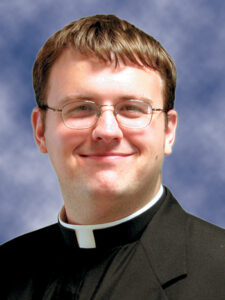
 Dear Parishioners,
Today, we celebrate the feast of St. Francis of Assisi. This is a very special year for St. Francis because this is the 800th anniversary of his death. In memory of him, the Church has declared this year a special jubilee. (Until January 10, 2027) For this year, the Church offers a plenary indulgence to all the faithful who under the normal conditions of Eucharist, Sacramental Penance, detachment from sin and prayers for the Holy Father, participate in the Year of Saint Francis by visiting, in the form of a pilgrimage, any Franciscan conventual church or place of worship anywhere in the world dedicated to Saint Francis or connected to him for any reason, and there devoutly follow the Jubilee rites or spend at least a reasonable period of time in pious meditation and raise prayers to God so that, following the example of Saint Francis, feelings of Christian charity towards their neighbors and authentic vows of harmony and peace among peoples may spring forth in their hearts, concluding with the Our Father, the Creed and invocations to the Blessed Virgin Mary, Saint Francis of Assisi, Saint Clare and all the Saints of the Franciscan Family.
There is much that could be said about St. Francis from his apostolic zeal to his loyalty to the Church that often misunderstood him. One aspect of his life I would like to focus on is his love for all things natural. He famously had a deep kinship with animals, befriending a wolf and preaching to birds. He spent a lot of time in nature. Even in Franciscan monastery gardens, he would tell his friars to leave a part of the garden wild so that whatever naturally grew there would be undisturbed. He talks about this great love for nature in his Canticle of Creation.
What I find most fascinating about his Canticle is that he loves nature not because it is useful or makes him feel good or that he hates humanity. He loves nature because God created the world and made it good. He does not treat nature like it is above him but more like his siblings. As we all know, we love our siblings even if they can be inconvenient. So, in each stanza he points out how the sun, the moon, water, air, fire and even death have their purpose and he praises God for each of them.
I recently learned that when he wrote this great hymn, he was very ill and could barely see. In fact sunlight hurt his eyes and he could not enjoy the world like he would prefer. I think that this hymn is also then an act of trust in God who gives all kinds of gifts, even ones that hurt for our own holiness. Even though this sun hurt him, he did not curse it but loved it anyway.
I think there is much for us to learn from St. Francis. He witnessed poverty to a rich world and ran to a people that thought they were above nature. So, in that respect I don’t think his time was much different to our own.
God Bless!
Fr. Carter